Familiarize Yourself With the Purpose of Each Conjunction
The trouble I had the first time I taught conjunctions was not realizing that even though I used them all the time, I didn’t know how to explain what each conjunction did!
If that’s you, here’s a chart with precious information!
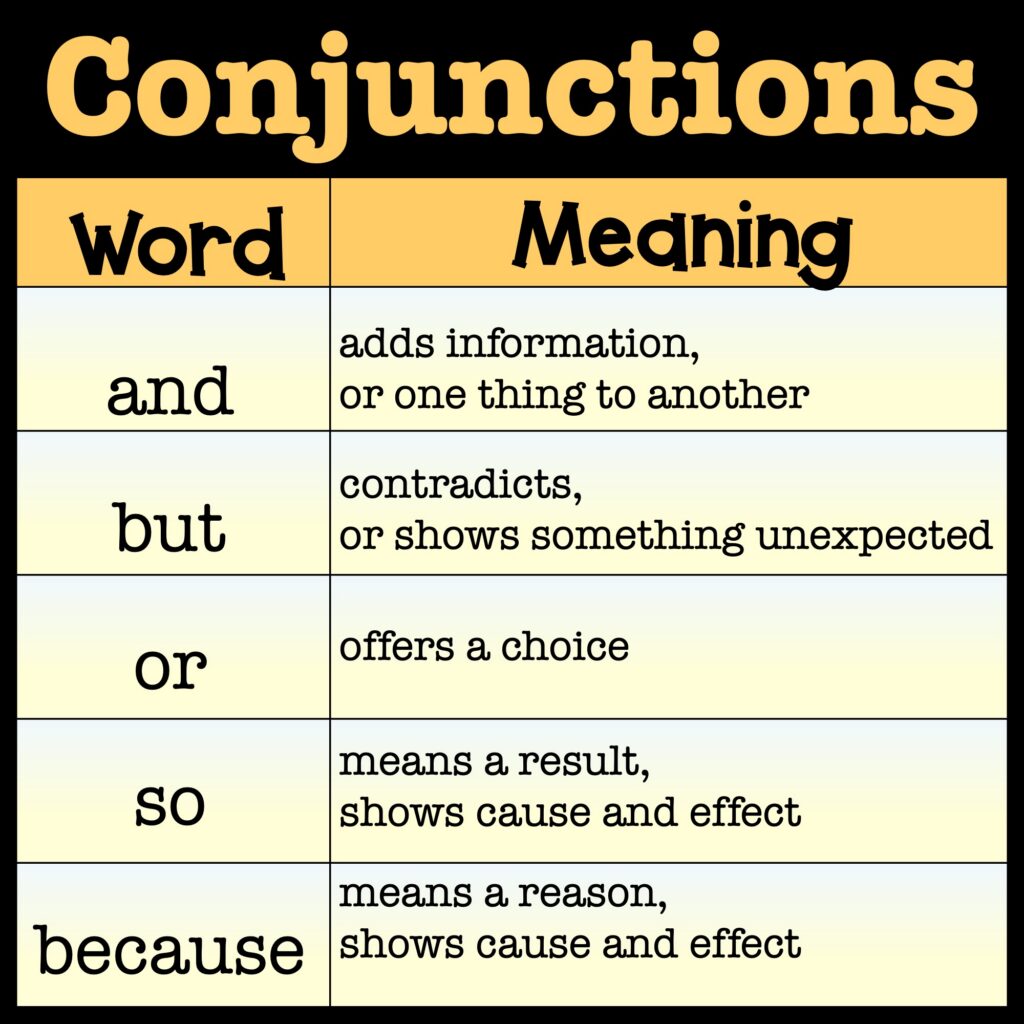
If you’re ready to jump into lesson planning, here are some things that I do when teaching conjunctions:
1. Introduce One Conjunction at a Time
For simplicity, I like to teach one conjunction per day. I start with “and”, but you can choose which ever one you like. I’d just avoid “so” and “because”, because of the cause and effect nuance.
Find a few examples in picture books and read them to your students. It’s fun to emphasize the word “and” by exaggerating and stretching the way you say it. That helps students really feel the conjunction working.
2. Model How to Use Each Conjunction
Here’s an idea that’s always worked well with my students:
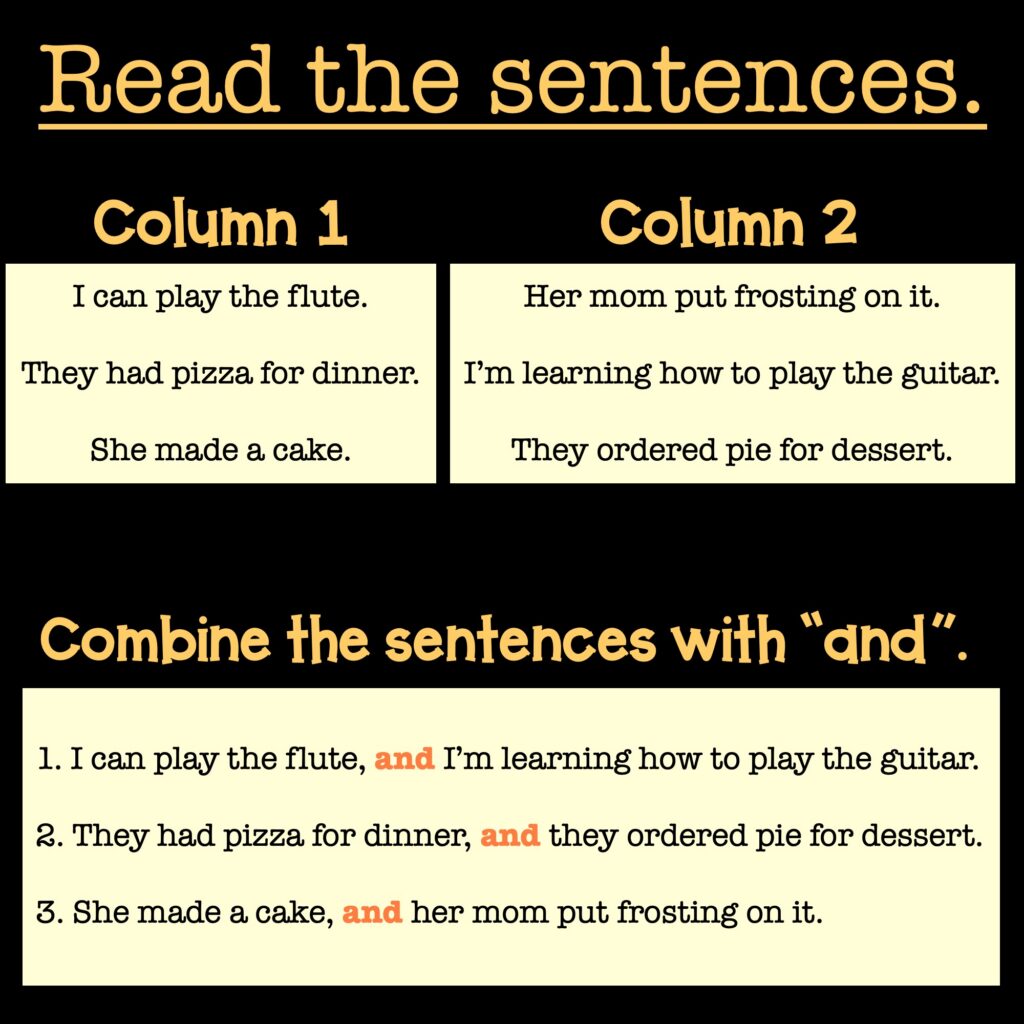
Make two columns on your board or chart paper. Write sentences that can be combined under each one. Mismatch them so the combinations aren’t obvious. You’ll see the example below.
Read the sentences and decide which two go together. Then write the compound sentence using the conjunction you are working on.
Remember to use commas when joining complete sentences. Phrases that cannot stand alone do not require the use of a comma before the conjunction.
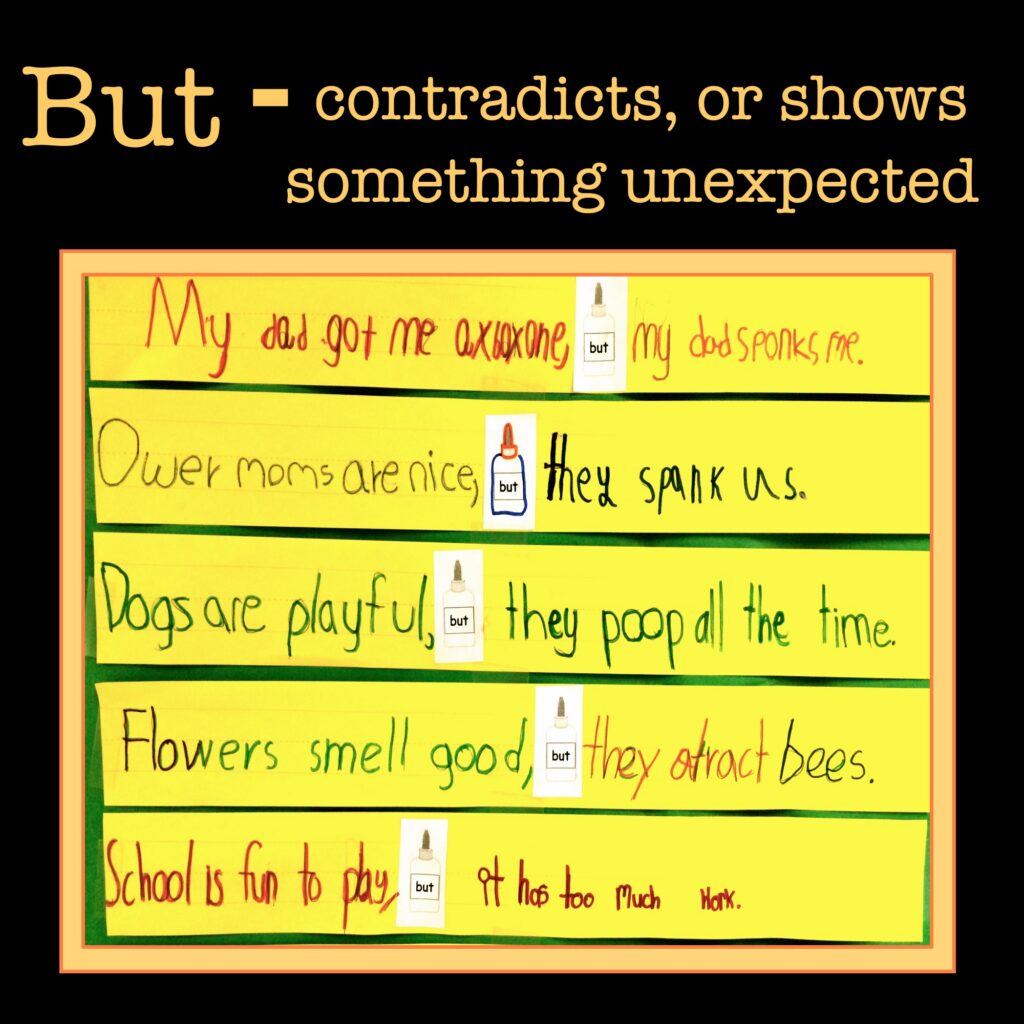
3. A Hands On Activity
Kids love writing their own compound sentences! If you’re concerned some can’t do it yet, pair the students who need help with independent writers!
4. Other Practice Ideas
Whole Group Mix and Match
Once you’ve introduced a few conjunctions each day, have students practice choosing which conjunctions to use when combining sentences. Give them sentences to combine and two conjunctions to pick from. At first, when I mix conjunctions I use contrasting conjunctions like “and” and “or”, or “and” and “but”, or conjunctions that relate to each other like “so” and “because”.
That can easily be done whole group! Write two sentences on the board and have students write a combining sentence on their white boards. Alternatively, you can give cards with conjunctions to your stucnets, and have them raise the one they’d use to combine two sentences you give.
Independent Practice
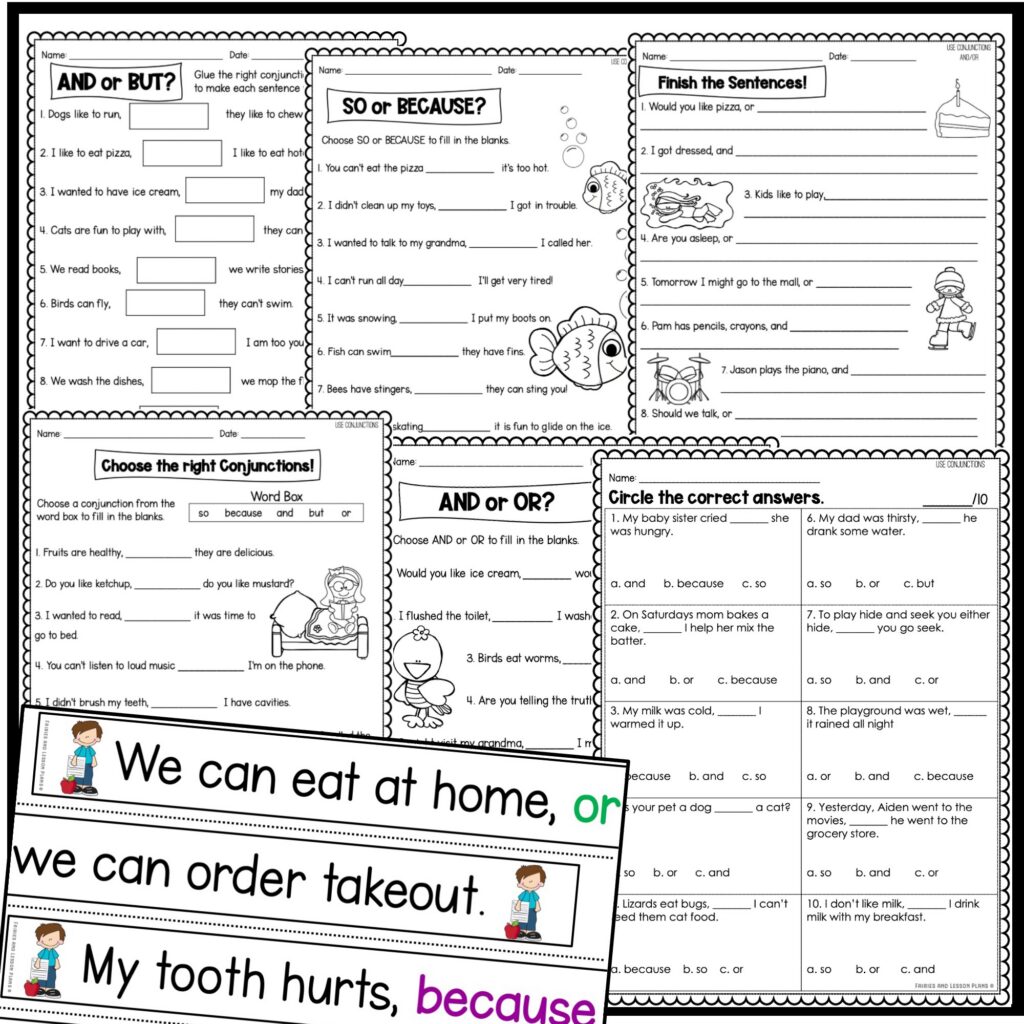
You could also give students worksheets with Conjunction Activities. I have a Conjunction Packet that covers the 5 conjunctions mentioned in this post, with all different kinds of practice. It also has the sentence strips for a center, and assessments.
5. Assess
The last step is to assess your students’ ability to use conjunctions properly. My packet also has assessments for you to use at the end of your Conjunction Unit.
I hope some of these ideas make it easier for you to teach conjunctions this year!
Oh! Try some of my other Parts of Speech samples to see if they are a good fit to your classroom!
